
Practical tools for K-12 literacy coaches, classroom teachers, and school leaders including study group guides, booklists, writing workshop advice, and  professional development planners.
Home     About     Contact Us     FAQs     Search     Tell a Friend     Workshops     Buy DVDs     Site Licenses     Members Only
 Subscribe
Gain immediate access to all our articles, features, on-line videos, and more. Click here for details.
 Search
Loading
 About Choice Literacy
About
Contact Us
FAQs
Free Samples
Testimonials
Workshops
Article Index
Site Licenses
 Resources
Literacy Coaches
Assessment Tools
Teaching Writing
Teaching Reading
New Teacher Mentors
ELL
Teacher Study Groups
Annotated Archives
Big Fresh Archives
Buy DVDs
Preview DVDs
 Other
Copyright Policy
Privacy Policy
Terms of Use
Search


Choice Literacy - Resources for K-12 Literacy Coaches and Teachers


Are you looking for the "how" of literacy leadership, written by colleagues who are just as smart, funny, and passionate about teaching reading and writing as you are?

Welcome! You've found Choice Literacy, the home on the web for K-12 literacy leaders.

We are literacy coaches, teachers, and school leaders with experience in dozens of diverse classrooms. This site presents the best of the tools, guides, literacy lessons, and sage advice we've gathered and tucked away as we've worked together over the years.

A paid membership at Choice Literacy provides you with access to over 300 site features, including:

  • Workshop protocols for leading study groups, in-services, and workshops
  • Sample observation forms and needs assessment surveys
  • Professional quality video examples of best literacy practices from classrooms throughout the country
  • The newest writing from top authors in the field
  • Short, focused articles for use in workshop discussions and mentoring meetings
  • Year-long calendars and plans for leading new teacher initiatives
  • Themed booklists for content and genre study

Over 20 new resources are added each month, with member updates weekly through our free e-newsletter, The Big Fresh. All in an ad-free environment - no hype, and no sales pitches for expensive literacy programs you don't want or need. Click here to read unsolicited testimonials from our newsletter subscribers and members.

The premise of Choice Literacy is simple - K-12 literacy leaders like you need instant access to short, practical, and smart resources as you work with colleagues and students. And you don't have a fortune to spend, which is why our quarterly or annual membership options are so affordable. You can get a better sense of the range of our offerings by clicking here and browsing through our free samples.

If you want a weekly update of innovative literacy advice delivered to you, take a moment to sign up for our free weekly e-newsletter of tools, tips, and strategies for literacy leaders, The Big Fresh:


For us, literacy teaching is a source of joy and an experience like no other. The literacy resources you will find here are informative, provocative, and infused with the humor that can only come from decades of lively days in classrooms.

We hope you learn something new every time you visit, and always leave more energized to teach literacy learners of all ages.

Respectfully yours,

The Choice Literacy Team


[Click here to read unsolicited testimonials from our newsletter subscribers and members.]

[Click here for free sample articles.]


[Click here for information on our site license discount rates.]


Featured Resources
The Big Fresh from Choice Literacy November 21, 2009 This is Only a Moldy Test
There is something powerfully but subtly disturbing about public messages we see or hear often that are never updated or refreshed. Here's a challenge for you this week - find one small, tired piece of the public face of your school or classroom that you can easily update (or even remove if it has outlived its purpose). . . . more

Is "Just Right" Still Just Right?: Helping Children Select Appropriate Books
Clare Landrigan and Tammy Mulligan
e taught together in an elementary classroom for years. One of the most important things we always talked about with students was the concept of "just-right" books. We used the analogy of the three bears, teaching our students that there were three types of books: Too Hard, Too Easy and Just Right. While it made sense to us back then, we are now unsure that this analogy is "just right" as we watch readers from across districts and grade levels. . . . more

"This Could Be Our Family": Books for Children with Lesbian and Gay Parents
Andie Cunningham
My daughter Alysa and her other mother snuggled into the recliner, not saying a word. The only sound I could hear was an occasional page turning. I took this as a hopeful sign. And then: nothing. No sounds. No page turning. No bodies moving in the chair. I walked to their chair, wondering what they thought of the book. Alysa looked up at me and said quietly, "This could be our family." . . . more

Previewing New Books with Students (VIDEO)
Franki Sibberson
Book choice is something that we talk about all year long. Years ago, I did several minilessons on book choice early in the year and assumed that once my students knew how to choose books, they would be set. But I soon realized that book choice changes as readers change. The advice that helps students choose good books at one point in their reading lives, doesn't help when they are at a different place as readers. Now, I include minilessons throughout the year that focus on students book choice. . . . more

Conferring to Support Book Selection Skills
Volume 2 Number 2 November 14, 2009
Welcome to the latest Teaching Beyond Reading Levels Digest! Conferring with students to help them select books for independent reading is a skill I'm always working on - I doubt it's one any of us can ever truly master. . . . more

The Big Fresh from Choice Literacy November 14, 2009 The Right Container
Once you've found the perfect book boxes or bags for your students, the bigger challenge is to figure out what to put in them. . . . more

Book Boxes - Voices from the Classroom
Organizing the books that your students are reading independently often presents a challenge for teachers. How can you keep track of what's in the boxes, ensure everyone is making appropriate choices, and have enough of the books your students need on hand? Many teachers use book boxes, book bins or book bags to help their students stay organized for reading times. Sometimes these boxes or bags contain books that are "just-right" for the child to read independently. In other classrooms students use these boxes or bags to think ahead in their reading. We have learned that there is no one right way to manage books for independent reading. There are many ways that work well. We asked four Choice Literacy contributors to share their strategies here for making the best use of book boxes in classrooms, as well as dealing with problems that arise. . . . more

Assessing Professional Development: Focus on Feedback (PD PORTRAITS)
Jennifer Allen
Designing professional development opportunities that meet the needs of all teachers has always been a challenge, and not something I should take for granted. Just because a format or session worked once, doesn't mean it will continue to worth with different groups of people. Over the years I have found that planning effective development is built around three key elements . . . more

Using Student Conferences to Build Book Choice Skills
Franki Sibberson
I went through a phase last January where I just couldn't find a book that I loved. I started lots of books, but didn't finish any of them. I tried to continue my usual routine of reading at bedtime, but I'd fall asleep. This had never happened to me - I was in a reading rut and I couldn't get out of it. It took a spring break vacation on the beach before I finally found some books that I loved and was able to enjoy my bedtime reading. Those few months of non-reading at night reminded me that these ruts happen for all readers, no matter how ingrained the routines are and how much they cherish reading time. . . . more

"If You Like Matt Christopher" Student Book Share (VIDEO)
In this video from Franki Sibberson's grades 3-4 classroom, boys share books that are similar to ones written by Matt Christopher. Franki explains how the group came about, as well as the value of these peer-led small groups. . . . more

The Big Fresh from Choice Literacy November 7, 2009 Faith, Doubt, and Effort
What are you doubting in your work?  What can you learn from those doubts? When I think of the one project where I haven't made much progress this fall, I realize I have been going it alone. . . . more

Learning to See: The Power of Observation with New Teachers
Volume 1 Number 2 November 2009
Welcome to this month's New Teachers Digest! I recently took up yoga. It's given me a new appreciation for the power of observation. I have realized that if you have few reference points for what yoga poses look like it's hard to achieve the desired positions without a visual model- especially for those like myself who are spatially challenged! Over the years, I have found that one of the most beneficial experiences that we can provide new teachers is the opportunity to observe their colleagues in action teaching. I hope you enjoy these new features and old favorites from the Choice Literacy Archives. . . . more

Many Languages, Many Texts: Book Time in Preschool (VIDEO)
In this brief video, Melissa Kolb explains "Book Time" in her preschool class. It's a time when many volunteers read books informally to small groups of children in their home languages. . . . more

Teaching Revision to Struggling Writers
Clare Landrigan and Tammy Mulligan
Revision can be a difficult process for so many writers - kids and adults alike! As writers, we both know how difficult it is to come up with a topic, get our ideas down on paper, think about how to communicate what we are really trying to say, and then revise the piece to make it clear and engaging. Professionally, we tend to write in tandem. We typically begin by talking through an idea and generating thoughts. Then one of us takes a crack at the first draft. The other person reads it and gives suggestions for revisions. The revisions can go back and forth several times between us before the paper is complete. . . . more

The Big Fresh from Choice Literacy October 31, 2009 What's Your Wallah?
Teachers and literacy coaches are expected to do so many things well - often far too many things well. We excel at some tasks, and muddle through many others. There is much to be gained by getting creative in reallocating responsibilities. . . . more

Setting Up the Classroom for Teaching Beyond Levels
Volume 2 Number 1 October 31, 2009
Welcome to the new Teaching Beyond Reading Levels Digest! This topic has been a focus of mine for years. Early in the school year, much of my time goes into setting up the classroom and library for instruction, as well as getting to know students as learners, not numbers from an assessment grid. I hope you enjoy these new features and old favorites from the Choice Literacy Archives. . . . more

Making Predictions and Finding Evidence in Text (VIDEO)
In this video from a fifth-grade small group, Clare Landrigan talks with students about making predictions and finding evidence in text. . . . more

Assessment Beyond Levels: The Reading Grid
Cathy Mere
Assessment systems that work are difficult to find. I've been teaching for just over 20 years now, and I'm quite sure I've tried nearly that many systems for organizing assessment information. I've tried mailing labels, note cards, file folders, and post-its (that was a mess!). I've created charts, templates, grids and checklists. I'm fascinated to see how other teachers collect information in their classrooms, and until a few years ago was always looking for a system that worked for me. I think that's the key: finding a system that works in YOUR classroom. About five years ago I tried to find a system that allowed me to keep individual conference notes over time in one handy place. Using a spiral notebook, I divided the pages so each child had 3-5 pages, and kept notes on reading and writing conferences. . . . more

Selecting Books for Instruction
The purpose of this cluster is to help teachers select texts for instruction, matching books to emerging student, small-group and whole-class needs. . . . more

The Big Fresh from Choice Literacy October 24, 2009 A Killing Frost
Sometimes an activity fails over time gradually because it has run its course - participants slowly tire of it, or have moved on to other interests. Other times there is definitely a moment when a change was made without a noticeable immediate effect. . .yet in hindsight it was the killing frost. . . . more

Moving from Assessment Data to Classroom Practice
The purpose of this cluster is to help teachers make sense of the data that they are collecting about their students, and use it to design instruction. . . . more

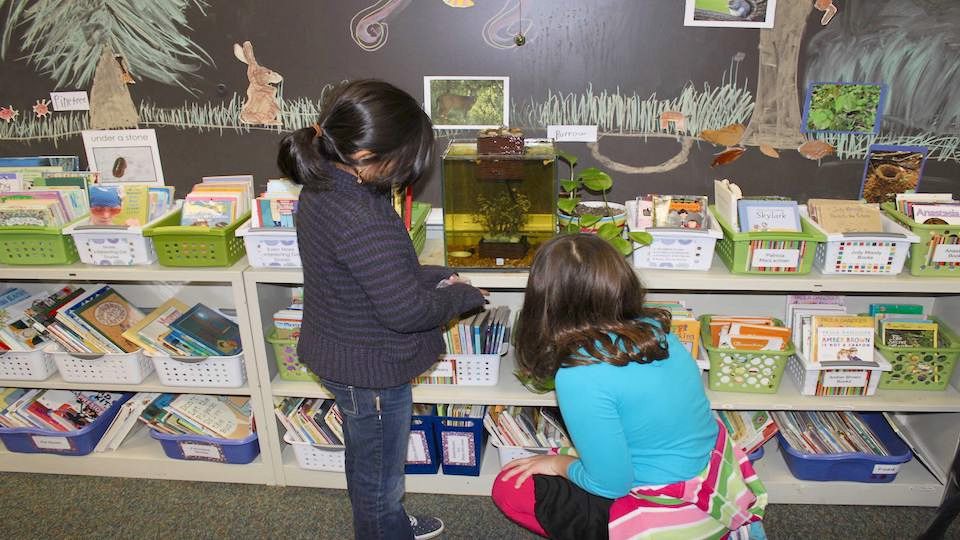
What Messages Do We Give Students with Our Classroom Library Design?
Franki Sibberson
The design of our classroom library gives a message to anyone who walks into our classroom. But most importantly, the way that it is organized gives big messages to our students about the things we value about their reading lives. The students know what is valued when they look at the way that reading materials are organized. . . . more

Ready-to-Go Readers' Theater Books
Shari Frost
Fluency is not all about rate. There are three other components. The component that isn't getting nearly enough attention is prosody - using appropriate tone, pitch, and phrasing to communicate meaning. The preceding definition can be summarized by the old informal phrase, "reading with expression." Prosody is an excellent window into a student's comprehension of text. . . . more

The Power of Wonder Questions
Andrea Smith
Wonder Questions are a critical part of my students' nonfiction reading. Debbie Miller has written and talked extensively about these questions in her book Reading with Meaning. Rooted in a respect for each individual's learning and interests, Wonder Questions honor the fact that each person views the world differently. Given time and support to identify interests and the freedom to consider "What do I want to learn?" children naturally understand how to create authentic, thought provoking questions. Wonder Questions help a teacher consider that fragile balance of support - knowing when kids need us, and letting them discover when they can move ahead without us. . . . more

Writing Do-Overs: ERPs in the Classroom
Heather Rader
We loved do-overs on the playground, but young writers don't have the same enthusiasm for do-overs in writing. When I was teaching I thought maybe it was just my students, but now as a coach, I see the trend in many writers. When I go into a classroom to work on revision, I ask the students to answer three simple questions on a half-sheet pre-assessment. . . . more

Extreme Makeover: Revision Edition
Heather Rader
Once upon a time in my third-grade classroom, I had an eight-foot pencil poster on my wall that listed the steps of the writing process from prewriting at the point to a publishing ferrule (the crimped metal band that connects pencil and eraser). About half-way down that pencil was the bold word "revising". It came after drafting and before editing and it was not, shall we say, beloved in our classroom. . . . more

The Big Fresh from Choice Literacy October 17, 2009 Urawaza
As a child, I loved reading the "Hints from Heloise" column in the newspaper - little tips and shortcuts for cleaning house or mending clothes.The funny thing is I didn't actually like cleaning house or mending clothes at all.  I still don't. There is just something almost magical when you realize there is a quick and easy solution to one of life's small irritants (stains in the sink, a door that sticks) you've put up with forever. . . . more

Teaching With Wordless Picture Books (CHOICE LITERACY CLUSTER)
This cluster is designed to help teachers consider different ways of using wordless picture books for reading instruction. . . . more

It's Not the Assessment - It's How You Use It
Clare Landrigan and Tammy Mulligan
Required district or school assessments are often viewed as a list of numbers that need to be provided to a certain person by a certain date. The goal is to get them done; recorded; and delivered. Kids are then sorted by scores, and resources for extra services are allocated. The quantitative performance is emphasized, and often the only aspect of the assessment that is considered. . . . more

Committee of One (Building a Reading Culture Series)
Ellen McEvoy
This year I am working in the school where I volunteer to build more of a "reading culture." Everyone in our school spends a lot of time on literacy, and I've been impressed with the writing the kids do (with the quantity and variety, at least). Yet it still seemed that something was missing. Most of the kids I talked to were not reading for pleasure; it seemed that "no homework" was interpreted as "no reading" for too many. I thought a parent and teacher committee might be able to help, and suggested that we form one. It's no surprise that I was made chair of the committee! . . . more

The Big Fresh from Choice Literacy October 10, 2009 Rapt Attention
How do we help students focus on learning in a world where continuous texting, intercom announcements, and other distractions are the norm?  I sometimes wonder if the increasing lack of civility we see every day isn't the result of no one pausing anymore before they interrupt the conversations and work of others.  We've always talked about the gift of time, but these days the gift of attention seems greater. The science of distraction and concentration is attracting much more research interest, if only because technology is changing so many social norms when it comes to interrupting others. . . . more

Helping Students Deal with Distractions
Clare Landrigan and Tammy Mulligan
We have had the privilege of spending the last few weeks in many teachers' classrooms supporting them as they launch their literacy workshops. The first few weeks of school are so important for making the structures and routines you want to use all year long consistent and predictable. It is amazing how exhausting it is to teach 26 little bodies to follow directions, sit in the correct spot, find their materials, not talk to the person next to them, and read! One topic that comes up again and again with the teachers we mentor is student distractibility. Distraction can play out in many forms depending on the grade level and chemistry of the class, but the concern is common across many classrooms, schools, and districts. . . . more

Infographics and Lists in Science Notebooks
Andrea Smith
"Did you ever think that a rotting log could be so interesting?" Pete asked as I sat next to him and Sam, his study partner. The two boys were sitting on a grassy patch facing a fallen apple tree. They had decided to study the life, systems, and relationships found in and around a decaying tree. The crab-apple tree, knocked down during a windstorm several years ago, had been purposefully left behind for exploration in our outdoor lab. . . . more

Using Picture Books to Teach Theme in Grades 3-6
Franki Sibberson
Theme is one of the most difficult things for students in grades 3-6 to understand. For students to understand theme and then discover themes in the books that they read, they need to synthesize the ideas across a book. This is often very difficult to do with the novels that they are reading independently. Yet when we scaffold their learning by using picture books with easily accessible themes and build on conversations from one book to another, our students can begin to understand theme and find theme in the books that they are reading independently. . . . more

The Big Fresh from Choice Literacy October 3, 2009 Pace, Space, and Voice
This week I visited a marvelous second grade classroom in Portland, Oregon.  As the teacher told the students it was time to move from their desks to the rug area for read aloud, she said, "Remember to monitor your pace, space, and voice." In less than 30 seconds, all 32 of these seven- and eight-year-olds had moved quietly, quickly, and efficiently to find spots on the carpet. . . . more

Help! Our Grade-Level Team Meetings Are Awful! (LITERACY COACH CONFIDENTIAL)
I meet regularly with grade-level teams as part of my coaching work. Getting these team meetings scheduled during the school day was a major victory for our staff, but I fear we will soon lose this planning time. We only have half an hour each week for these meetings, and between the team members who show up late, who are missing materials, or who keep us off task, it's not a very productive time. I hate feeling like a cop in the meetings, and it's not doing much good anyway. What suggestions do you have for making these meetings more collaborative and productive? . . . more

Weekend Headlines: Whole Class Share (VIDEO)
Katie Doherty
In this final installment of a three-part video series, Katie Doherty and her sixth-grade students continue the Weekend Headlines activity. The activity ends with a whole-class sharing and discussion of student writing. . . . more

Weekend Headlines: Peer Response (VIDEO)
Katie Doherty
In this second part of a three-part video series, Katie Doherty and her sixth grade students continue the Weekend Headlines activity. In this installment, Katie sets up a peer response procedure with students. . . . more

The Big Fresh from Choice Literacy September 26, 2009 Practice, Persistence, and Pearls
What do parents want to hear?  They want to be reassured by us that their children are developing the necessary skills they need to survive, or even better, thrive in the world. . . . more

Weekend Headlines: Introduction (VIDEO)
Katie Doherty
In this first of a three-part video series, Katie Doherty and her sixth grade students begin the Weekend Headlines activity. Each Monday, students listen to Katie share some of the headlines from the local newspaper, and then they share their "headlines" from the big events that happened to each of them over the weekend. These personal headlines provide a natural starting point for writing, peer response, and revision. . . . more

Expectations for Grade-Level Team Meetings
Clare Landrigan and Tammy Mulligan
We are often asked by coaches how we get the teams we are working with to actively participate in the meetings we facilitate. When first asked this question, we tended to shrug and say, "We don't know." After some reflection, we realized we are deliberate in engaging teachers and then holding them accountable in the staff development sessions we facilitate. The key is setting high expectations and following through on them. . . . more

What Goes in the Writer's Notebook?
Aimee Buckner
I start off each school year with good intentions. My files will be more organized, my newsletters more concise, and my time more productive. I'll read more about teaching math and social studies and reading and writing. I'll be a better teacher by staying on top of the newest research and going to conferences. But none of that seems to be as effective in improving my teaching as solid reflection and asking hard questions about what I do and why I do it. . . . more

Out of the Closet and into the Classroom: Bookroom Management Tips for Literacy Coaches
Shari Frost
Literacy coaches seldom have neutral feelings about their school's literacy closet or bookroom. They either love it or hate it. They love it at the beginning of the school year when everything is neat, well-organized, and dust-free. They love it when things aren't going so well out there. At such times, the literacy closet becomes a place of refuge; there's always something to do there. They hate it when they are trying to find a particular set of books to use in a classroom; even though the books haven't been checked out, they aren't on the shelf either. . . . more

Character Study in Grades 3-6
Franki Sibberson
When I think about my own reading and the favorite books that I remember from different eras of my life, it is the characters that I remember. I remember Betsy, Nancy Drew and Mary Lennox from my elementary years as a reader. . . . more

The Big Fresh from Choice Literacy September 19, 2009 Between Page and Screen
A good movie often sends me scurrying to buy the book, eager to learn more.The reverse is also true - I've been so disappointed by some of the film adaptations of my favorite books that I'm sorry I ever went to see them. When you love a book, it's irritating to have those perfect mental images in your head replaced with the wrong actor, the wrong music, and sometimes even the wrong ending if the director takes too many liberties. . . . more

From Reading Response to Draft (VIDEO)
In this quick conference from a 4th grade classroom, Aimee Buckner listens as Summer explains how a question from the book Would You? Could You? inspired her to create a list. Aimee talks with her about moving from the reading response journal with this brainstorm to a draft in writer's workshop. . . . more

Rethinking Reading Logs with Wikis
Shelly Archer
very teacher I know spends the end of summer and the first weeks of the school year thinking about their room set-up, curriculum ideas, the classroom community, and changes they want to make from the previous year. . . . more

Dear Mrs. T: Moving Students from Summaries to Rich Response
Karen Terlecky
"Dear Mrs. T" are three of my favorite words in my 5th grade reading workshop. They are the first three words in the reading letters I receive from my students every three weeks. Those words signal to me that a student in my class is getting ready to let me be a part of his or her reading life. . . . more

Mentoring from the Real to the Ideal: Mental Images of Teaching
Suzy Kaback
When I work with new teachers, I often feel compelled to tell the story of my friend Michelle who was afraid to be a mother. Married for three years, Michelle and her husband David were in heavy talks about parenthood. David was eager to be a dad and Michelle wanted to share his enthusiasm, but she had concerns about her parental fitness. In conversations with me, Michelle admitted that her models of parenting were pretty impoverished. Her memories of childhood were clouded by images of an impatient, tired mother, and a father whose work kept him away from home for weeks at a time. "I know what good parents should sound like, how they should act," Michelle confessed, "but I'm afraid I won't be able to make it happen, that I'll suddenly just become my mom. . . . more

Fostering Relationships and Building Learning Environments
Volume 1 Number 1 October 2009
Welcome to this month's New Teachers Digest! Early in the year, I find supporting teachers is often about welcoming them to the school community and helping them create comfortable environments for learning. Chatting about room layouts and cozy areas for literacy can be less threatening to new teachers than discussions of assessments and classroom management (though those often come up too). I hope you enjoy these new features and old favorites from the Choice Literacy Archives. . . . more

The Big Fresh from Choice Literacy September 12, 2009 But What About the Kid Who. . .
But what about the kid...who doesn't want to write?  Who refuses to work in groups? Who disrupts most class meetings? Who never seems to be able to complete anything? Donald Graves used to talk about the kid. . .you know the one. It's the student who consumes your thoughts, or more likely, sits like a stone in the center of your forehead till you've got a roaring headache. . . . more

Teaching Students to Organize and Maintain Classroom Libraries (CHOICE LITERACY CLUSTER)
This cluster is designed to help teachers think through various ways to include students in organizing classroom libraries, as well as the reasons for doing so. . . . more

Twitter Me This: Using Cell Phones to Build Literacy Skills and a Reading Community
Lisa Koch
Although many of us see the phone as a constant source of distraction, others see the phone as yet another way to meet students where they are - to take advantage of students focused 100% on something. When they are least expecting it, the solution may be to teacher time warp. . . . more

A Three-legged Dog and a Show About Nothing
Jennifer Jones
I've been in a real slump, a writing slump that is. It seems like it's been ages since I've opened up my writer's notebook, picked up a pen, and let loose on the pages; until today that is. . . . more

The Big Fresh from Choice Literacy September 5, 2009 The Problem with Prompts
Do you love writing prompts? Despise them? I suspect most of us fall somewhere between these extremes, which can make for some lively discussions in the teachers' workroom. . . . more

Lessons from Family Writer's Workshop
Clare Landrigan and Tammy Mulligan
While all of our professional instincts told us that hosting writer's workshop with our own children was not the best plan. . . we decided to do it anyway. For each of the past few summers, our four children (two of Clare's, two of Tammy's) have attended camp together for five weeks, as having them in the same place helps us with our work schedules. . . . more

Cap'n George: Mentors Who Matter
Shirl McPhillips
Poems mentor me. But having a personal mentor as well means everything to me as a continual student of writing. So, as school begins, I want to think more about the teacher as mentor. Sounds obvious, but is it? What does a good mentor do? Will students see us as their mentors? Will they see themselves as being mentored? What does that mean they do? . . . more

The Over-Prompting of Young Writers
Heather Rader
I have been teaching long enough to remember a time before our large-scale state writing assessment when the word "prompt" wasn't connected to writing. Yet after receiving our first set of unfortunate writing scores years ago, my team bought a Book of 101 Everyday Prompts. Our well-intentioned assumption was if teaching kids to respond to a prompt helped, then having them practice more would really increase their success. Some teachers tell me their students respond to a writing prompt every day. Here are a few prompts I've read student responses to . . . more

A Coach's Perspective: No More Flying Pig Prompts
Heather Rader
The search for great prompts was pointless. There may just be bad prompts and not-so-bad prompts. Along with other teacher leaders, I seek not-so-bad prompts with multiple entry points. . . . more

The Big Fresh from Choice Literacy August 29, 2009 What Will You Learn This Year?
When I was working with young teachers, I had a trick for discovering which ones really didn't enjoy reading.I'd ask what book they were looking forward to reading in their free time. . . . more

Great Books to Share When Studying the Ecosystem (BOOKLIST)
Karen Terlecky
I do understand the reasons why textbooks could be helpful as resources. I just worry that the textbook might become the entire science curriculum. I have tried to come up with alternatives to using the textbook when studying our 5th grade life science unit on ecosystems. . . . more

Writing Like a Scientist: Launching a Scientist's Notebook
Andrea Smith
When I transitioned from 18 years as a primary teacher to a 4th grade classroom, I started thinking about how I could use the same successful strategies for launching writing workshop to support my students as I introduced science notebooks. I wanted to find ways students could begin writing like scientists with authentic experiences and community support from their classmates and me. Children understand the world of fiction and see the benefits and results of writing through the work of their favorite authors and poets. But what did they know about the writing of scientists? How could I help my students gain an appreciation and understanding of scientists as writers? . . . more

Overcoming Slumps: Principles for Student Writers
Clare Landrigan
I began this summer in two slumps - - a running slump and a writing slump. I injured my lower back in early May and could not run for about six weeks. At the same time, life became hectic and for many reasons I seemed to lose my writing momentum. I was feeling badly about both and wondering how I was going to get back in the saddle. I can now proudly say that eight weeks later, I am back on track with both! As I reflect on how I came out of my slumps, I am finding that in many ways my experience paralleled that of students who have writing slumps in the classroom. . . . more

Staying Focused in Literacy Workshops (VIDEO)
Clare Landrigan
In this video, Clare Landrigan meets with a group of 5th graders to talk about what's going well in literacy workshops, and to set individual goals. Stamina is an issue many of the students are dealing with, so many of the goals involve strategies for staying focused while reading and writing. . . . more

Running and Reading Logs Part II (VIDEO)
Clare Landrigan
In this second video in a two-part series, Clare Landrigan meets with a group of 4th graders to talk about reading logs and goals. In this excerpt, Clare confers with students over their logs and debriefs with their teacher. . . . more

Running and Reading Logs (VIDEO)
Clare Landrigan
In this first video in a two-part series, Clare Landrigan meets with a group of 4th graders to talk about reading logs and goals. In this excerpt, Clare uses the analogy of how runners use logs to chart progress and set goals. . . . more

The Big Fresh from Choice Literacy August 22, 2009 Capturing a Moment
When I was working with young teachers new to the profession, one of the first things I did in late August was to have them complete a simple survey that I saved for them to view again at the end of the year. They answered questions and prompts like these . . . more

Setting Reading Goals (VIDEO)
Franki Sibberson
I find it's important for students to set long-term goals periodically throughout the year. In this video, students are thinking about their long-term nonfiction reading goals. We do this at the end of a whole-class share session, so students can hear the thinking of their peers. . . . more

Triangulating: The Importance of Multiple Data Points When Assessing Students
Clare Landrigan and Tammy Mulligan
We went to a professional development session a few years ago with Elizabeth City and she gave us a name for something we have always believed - the importance of "triangulating" our data. Triangulating data means you use multiple sources of data to illuminate, confirm, or dispute what you learned from an initial analysis of one piece of data. . . . more

Accurate But Not Quite Fluent: Books for Second-Grade Readers in Transition
Katie DiCesare
This summer I have had much to think about as I loop with my first graders into second grade. Knowing their taste for books, I have enjoyed finding books about topics that will interest and support them as they transition into reading longer texts. I have also thought about finding new texts that support the second-grade curriculum goals and standards. . . . more

The DIBELS Divide (LITERACY COACH CONFIDENTIAL)
We have a new curriculum coordinator who requires the Dynamic Indicators of Basic Early Literacy Skills (DIBELS) as our primary assessment tool. I am an experienced teacher, confident about the assessments I use. . . . more

The Big Fresh from Choice Literacy August 15, 2009 Running Your Own Race
I always wondered why thoroughbreds in horse races wear blinders (or "blinkers" as they are called in the business). Those shields at the sides of their eyes keep them from getting distracted by what the other horses are doing. When you're trying something new in your classroom or school, sometimes the best thing you can do is to put blinders on for a bit. . . . more

Meeting Area Makeover (VIDEO)
Are your meeting area wall displays too cluttered? "The Sisters" (Gail Boushey and Joan Moser) help a 3rd grade teacher rethink her wall displays and meeting area in this ten minute video . . . more

Thinking About 5th Grade Read Alouds
Karen Terlecky
It's that time of year again - the time when I sit down at my diningroom table, surrounding myself with books I have read recently and some old favorites. And then the fun begins -- I start to think about what books would be best to share with my fifth-grade students during read aloud time. . . . more

Bilingual (English/Spanish) Books that Celebrate Language, Family and Culture
Stella Villalba
Working with children and families who speak Spanish as their primary language at home brings with it special delights and challenges. It is so true when writers say that reading "takes you places." A good book will take you almost anywhere, but an extraordinary book can take you on a deeper journey of understanding not just yourself, but others around you. That is exactly what I am hoping for early in the year as I place books in students' hands and we read them together - that we start to understand where we all came from, and where we will all go together this year, right from the start. . . . more

Word Storms: Integrating Nonfiction, Word Study, and Technology (Part 2)
Andrea Smith
It's a busy Tuesday morning and my classroom is buzzing with the conversations of children. I settle in a chair beside Hirokai, a beginning English language learner, who is still shy about approaching peers for word study conversations and activities. Today, I can tell he would like me to be his partner; we always make eye contact during transitions and I could tell by his "eye message" as he calls a wink, he wanted to work with me. I try to capitalize on our short, but intensive partnerships during word study, taking advantage of our one-to-one time. We trade opportunities; he works on his English speaking skills and I work on learning how ELL students think and learn as they absorb a new language. We never know what we might learn together. . . . more

Morning Meeting in Kindergarten (VIDEO)
In this video, Danielle French leads her kindergarten students in Waterville, Maine during morning meeting. After the meeting, Danielle talks with "The Sisters" (Gail Boushey and Joan Moser) about the value of this daily routine. . . . more

Organizing for Coaching at the Start of the Year
This cluster is designed to help coaches think through the important things that are needed early in the school year to make their work with teachers effective. . . . more

The Big Fresh from Choice Literacy August 1, 2009 Pretzels and Purple Cows
Can your school be a purple cow? Of course it can, but it takes a level of empowering colleagues that is going to lead to grief now and again. . . . more

Native? Immigrant? Reconsidering Digital Literacy Through the Games We Play
Mary Lee Hahn
My iPod Touch is an ambassador. It has given me a peek into the world of my video game obsessed fourth graders and showed me that our brains are not as different as I'd been led to believe by articles such as Marc Prensky's "Digital Natives, Digital Immigrants." . . . more

Video Games and Multiple Intelligences
Mary Lee Hahn
It all started when I got my iPod Touch. I downloaded a few word games that were familiar (TextTwist and Chicktionary) and Bejeweled, a game where you group colored jewels in rows of three or more of the same color. When I needed a break from grading papers, or when I wasn't quite ready to start working, I would allow myself to play "just one level" or "for just five minutes" . . . more

How to Be of Use: Starting Strong
Heather Rader
After I ask the question, "What do you already know about coaching?" teachers often tell me "Very little." There is also misinformation that coaching is only for the struggling or new educators, not teachers at the top of their game. Sharing with teachers a "This I Believe" reveals my intention and they appreciate repetition of my mantra, "I believe all teachers deserve coaches." . . . more

How to Use a Coach: Four Things to Consider
Heather Rader
I'm not an expert in the classrooms I enter, but I often know enough to help a teacher move forward. As an instructional coach, I've worked with first year teachers, a thirty-two year veteran and many stages in between. Some teachers seem instantly comfortable with the coaching arrangement while others because of apprehension, misinformation or just being new to the process learn "how to use a coach" to their advantage through the process. . . . more

The Importance of Book Clubs for Learners of Any Age
Karen Terlecky
Just like my adult book club, there are many different styles of reading, preparing, and participating. But the commonality for these students is that they all agreed to finish a book by a certain date, they prepared for a discussion, and they participated in a meaningful conversation about a great book. Their reading lives were enhanced. . . . more

Living Words: Integrating Word Study, Technology, and Content Literacy (Part 1)
Andrea Smith
Blending nature, shared experiences, and common language, our ideas could best be captured and enhanced with a digital camera. Many people would consider a camera a common tool, but for me, using the camera to enhance our word work was a new idea. I wanted the camera to support my students' learning and enhance my teaching, using a familiar technology in a new way. We now live in a media ecosystem, so information with visuals is well received and makes lasting impressions. My simple digital camera could do more than capture special events in my classroom. I envisioned our pictures bringing our words to life. . . . more

Literacy Converation Starters and Icebreakers (CHOICE LITERACY CLUSTER)
This cluster is designed to help support literacy coaches and teacher leaders initiate thoughtful and purposeful conversations about literacy with colleagues. . . . more

Makeover for the Computer Area (VIDEO)
"The Sisters" (Gail Boushey and Joan Moser) work with Sarah and friends in Maine to makeover the computer area in her 4th grade classroom. . . . more

The Big Fresh from Choice Literacy July 25, 2009 There's Room for Me Here
What's the hardest thing for a teacher to do when setting up the room before students arrive? It may be leaving most of the walls and bulletin boards bare. . . . more

When Do I Launch the Writer's Notebook?
Aimee Buckner
It's the end of July, and where I'm from -- down South -- teachers are scrambling. Scrambling for last minute trips to the beach. Scrambling to clean out the closets they swore they'd get to this summer. Scrambling to school supply sales. Scrambling to get classrooms unpacked and ready to go. Students will be walking through the school doors in two short weeks. . . . more

Making the Most of Wall Displays (CHOICE LITERACY CLUSTER)
This cluster is designed to help teachers consider how to use the wall space in their classrooms and in the school in ways that support student learning. . . . more

Test-Taking Strategies Part III: Whole Class Debrief (VIDEO)
Andrea Smith
I am captivated by teachers' abilities to maximize time with students. Only an elementary teacher can check students' understanding of multiplication facts, conduct a class survey based on a student created question, write two parent notes and fill out a library book request form while waiting for a fire drill to pass. The same efficiency and commitment to maximizing time with students can be applied to our workshop classrooms, not by speeding things up, but by slowing down and taking time to honor all parts of our workshop experiences with children. . . . more

Our Daily Question: Building a Community Through the Data We Collect
Andrea Smith
Paying attention to details is valuable in a learning community. Knowing and understanding one's friends is important too. A Daily Question and Graph allows my students and me to get to know one another, to pay attention to one another, and to notice the hidden details. . . . more

The Book Lovers Quilt Project
Katie Doherty and Ruth Shagoury
We wanted to give the students a chance to talk about these books they love - and we wanted to preserve their choices in a community quilt to hang proudly in the classroom in the fall as a way to transition to the next class with a gift of book recommendations from the previous year. . . . more

The Human Face of the 21st Century Literacy: Favorite Technology Blogs (BEYOND GADGETS SERIES)
Franki Sibberson
Over the past few years, I have been trying to understand the concept of 21st Century Literacy. I am interested in technology, but adamant in my belief that any tool must be used in authentic ways. To use technology for the sake of technology serves no purpose for our students. I am working to understand how new technological tools might impact our classrooms, especially in the area of literacy. . . . more

Days Ease
Shirley McPhillips
Some people suggest that in summer's ease, we have the time to rethink our curriculum, to read and select books we want to use next year, to consider how we will begin again in the fall, to get better organized. Yes, we do. And, yes, we could. But somehow just thinking about all that makes me tired. . . . more

Changing the Learning Landscape: Organizing My 6th Grade Classroom (PHOTO ESSAY)
Ann Marie Corgill
It's that time of year when many of us are headed to a classroom that's been packed away for the summer, thinking, "HOW am I going to get this room together and unpack all these boxes and move this furniture?!" and "How can I make this room beautiful and purposeful for the students?" It's a big job, and even if you've been teaching for many years-or if it's your first teaching job ever, setting up the classroom and preparing that learning landscape can sometimes be overwhelming. . . . more

Literacy Coach Confidential: Teachers Resent Me - What Can I Do?
I was hired at a time when budgets are down. Class size is up, money for everything from field trips to new books is nonexistent. My salary isn't paid from those accounts, but it doesn't seem to matter to my colleagues. How can I gain the teachers' support, so I can help them? . . . more

Restless Wanderer: Lessons for Teachers from Summer Vacations
Shelly Archer
People who aren't teachers may envy us because we have our summers "off." Those of us inside the profession chuckle at the notion we are ever really untethered from our job. How we would love a few months, or at times, just a few minutes off from our continual reflection, revision, and reimagining of our classrooms. The truth is that our minds are always working on perfecting the art and science of teaching. Whenever I feel challenged or unsure outside the classroom, I try to find lessons in the experience that will make me a better teacher - even when I am on a holiday. This summer I went on vacation with my husband, and came back renewed, with new understandings of myself and a different attitude toward my students and my responsibilities. I wonder what lessons you are carrying away from your time "off" this summer? . . . more

Implementing RTI: Keeping Students at the Heart of Our Conversations
Jennifer Allen
The latest acronym you are likely to hear in any educational conversation is RTI, otherwise defined as Response to Intervention. Those three letters are popping up everywhere, from educational catalogs promising the perfect "program" that will fix all students struggling in literacy, to professional books on the topic. . . . more


 The Big Fresh
Sign up for The Big Fresh, our FREE weekly e-newsletter for K-12 literacy leaders.
[Browse Big Fresh Archives]

 Downloads
Clusters
E-Guides (pdf)
Print Downloads
Videos to View
Audio
Quote Collections
 Contributors
Jennifer Allen
Aimee Buckner
Jan Miller Burkins
Andie Cunningham
Shari Frost
Landrigan & Mulligan
Shirley McPhillips
Debbie Miller
Brenda Power
Heather Rader
Ruth Shagoury
Franki Sibberson
The Sisters